Loading content...
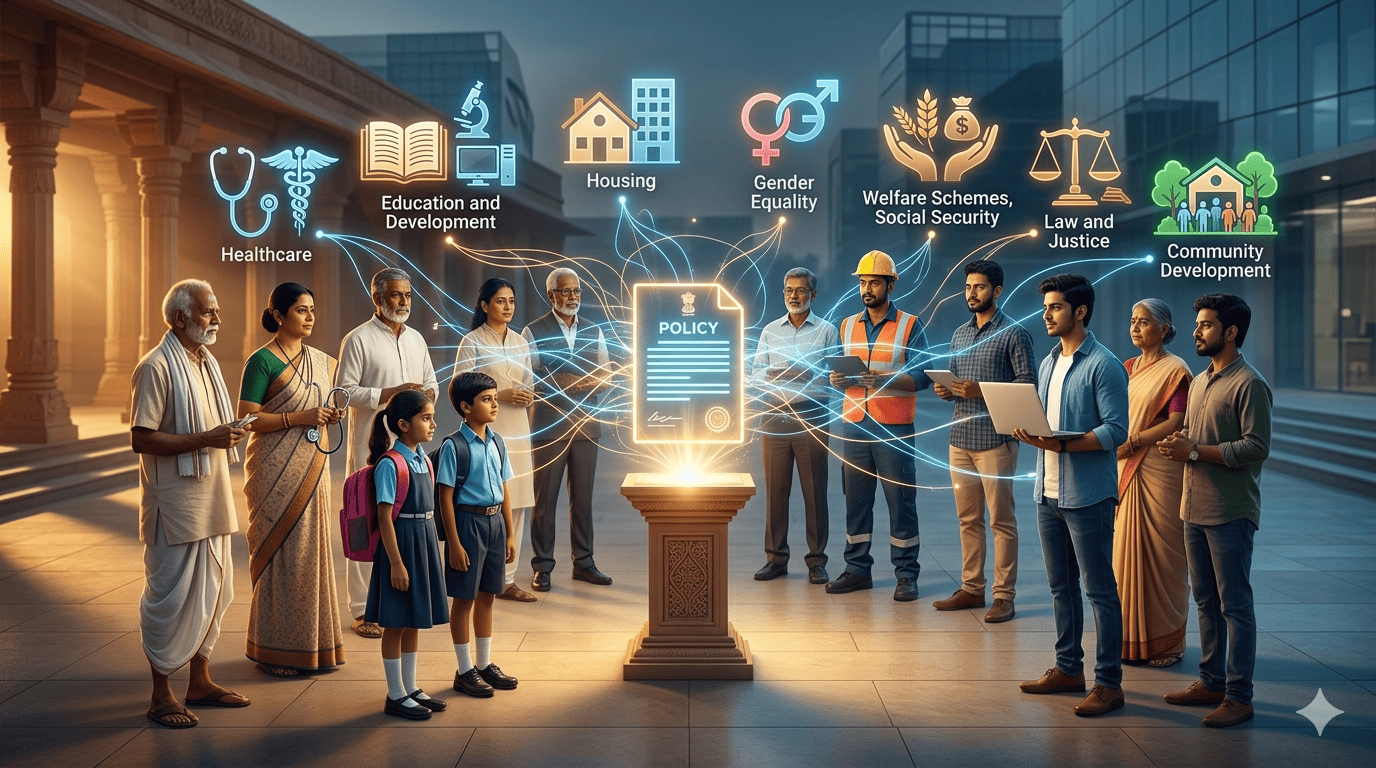
Social Structure, Public Policies, & Issues
సామాజిక నిర్మాణం, ప్రజా విధానాలు, మరియు సమస్యలు
This subject is included in exams:Group IGroup IIIGroup II
Topics
1
Indian Social Structure: The Caste System, Family, Marriage, Religion, Kinship, Tribe, Women in Indian Society, Middle class - Socio-cultural Features of Telangana Society
భారత సామాజిక నిర్మాణం: జాతుల వ్యవస్థ, కుటుంబం, వివాహం, మతం, సంబంధాలు, గిరిజనులు, భారత సమాజంలోని మహిళలు, మధ్య తరగతి – తెలంగాణా సమాజంలోని సామాజిక‑సాంస్కృతిక లక్షణాలు
2
Social Issues: Inequality and Exclusion in the terms of Caste, Communalism, Regionalism, Child Labour, Violence against Women, Human trafficking, Disability and Aged
సామాజిక సమస్యలు: జాతి, మతసంబంధం, ప్రాంతీయత, బాలశ్రమ, మహిళలపై హింస, మానవ దసలాప్రచారం, వికలాంగత, వృద్ధాప్యము వంటి అంశాలలో అసమానత మరియు విభజన
3
Social Movements: Tribal movements, Peasant’s Movements, Dalit Movements, Environmental Movements, Human Rights Movements, Backward Class Movements, Women’s Movements, Regional Autonomy Movements
సామాజిక ఉద్యమాలు: గిరిజన ఉద్యమాలు, రైతు ఉద్యమాలు, దలిత ఉద్యమాలు, పర్యావరణ ఉద్యమాలు, మానవ హక్కుల ఉద్యమాలు, సంబంధజాతి ఉద్యమాలు, స్త్రీ ఉద్యమాలు, ప్రాంతీయ స్వాయత్తత ఉద్యమాలు
4
Telangana Specific Social Issues: Vetti, Jogini, Devadasi Systems, Fluorosis, Migration, Child labour, Girl child Farmer’s and Weaver’s Distress
తెలంగాణ ప్రత్యేక సామాజిక సమస్యలు: వేట్టీ, జోగిని, దేవదాసి పద్ధతులు, ఫ్లోరసిస్, వలస, పిల్లల కార్మిక స్థితి, అమ్మాయి పిల్లల వ్యవసాయ‑జల్లెడ distress
5
Welfare Programmes & Social Policies: Affirmative Policies for Scheduled Castes, Scheduled Tribes, Other Backward Classes, Women, Minorities, Labour, Disabled and Children; Welfare Programmes; Employment, Poverty Alleviation Programmes, Rural and Urban Women and Child Welfare, Tribal Welfare
సమాజ సంక్షేమ కార్యక్రమాలు మరియు సామాజిక విధానాలు: షెడ్యూల్డ్ జాతులకు, షెడ్యూల్డ్ తెగలకు, ఇతర పశ్చాత్తాప వర్గాలకు, మహిళలకు, अल्पसंख्यकों, కార్మికులకు, వికలాంగులకు మరియు పిల్లలకు అనుకూల విధానాలు; సంక్షేమ కార్యక్రమాలు; ఉపాధి, దారిద్ర్య తగ్గింపు కార్యక్రమాలు, గ్రామీణ‑పట్టణ మహిళా‑పిల్లల సంక్షేమం, గిరిజన సంక్షేమం
Frequently Asked Questions
What is the significance of the subject "Social Structure, Public Policies, & Issues" in the competitive exam syllabus?
"Social Structure, Public Policies, & Issues" (సామాజిక నిర్మాణం, ప్రజా విధానాలు, మరియు సమస్యలు) is a foundational subject in the competitive exam structure, carrying substantial marks across multiple papers. It tests the candidate's understanding of core structures, conceptual frameworks, and historical or developmental phases. In TSPSC exams, a strong command over this subject is mandatory, as it frequently forms the basis for interdisciplinary questions that connect state administration, societal reforms, and economic development.
What are the core areas and chapters one must focus on in "Social Structure, Public Policies, & Issues"?
Preparation for "Social Structure, Public Policies, & Issues" should be organized around key thematic areas. This includes understanding the historical evolution, constitutional or regulatory frameworks, key statistical indices, and state-specific developments. For example, focus heavily on chapter summaries, core terms, chronological timelines, and official state documents like the Telangana Economic Survey or Socio-Economic Outlook, which provide updated, reliable data for the exam.
How should candidates bridge static theory with dynamic current affairs in "Social Structure, Public Policies, & Issues"?
To score highly in "Social Structure, Public Policies, & Issues", candidates must not rely solely on static textbooks. You must constantly update your knowledge with contemporary developments. For instance, connect historical events to recent memorials or heritage declarations, connect administrative principles to new government bills or judicial verdicts, and link economic concepts to the latest budget releases or policy reforms. Mentioning these updates in Mains answers demonstrates analytical active learning.
What is the recommended answer-writing structure for descriptive Mains questions in "Social Structure, Public Policies, & Issues"?
Descriptive answers in "Social Structure, Public Policies, & Issues" should follow a structured, logical format. Begin with a clear definition, historical context, or a concise introduction of the prompt. In the body paragraphs, use bullet points or subheadings to discuss key issues, positive features, challenges, and support your arguments with relevant data, committee reports, or constitutional articles. Conclude with a forward-looking, constructive summary that highlights policy solutions or developmental goals.
Why is practicing previous year questions (PYQs) essential for mastering "Social Structure, Public Policies, & Issues"?
Practicing PYQs for "Social Structure, Public Policies, & Issues" helps candidates decipher the exact mindset of the examiners. It reveals which topics are repeatedly questioned, the depth of conceptual detail required, and how the difficulty level has evolved over the years. By analyzing past questions, you can prioritize high-yield topics, avoid over-studying low-weightage chapters, and master the art of writing answers within the stipulated word and time limits.
How does bilingual material aid in understanding "Social Structure, Public Policies, & Issues" concepts?
Bilingual study guides for "Social Structure, Public Policies, & Issues" clarify technical vocabulary in both English and Telugu. In subjects like history, polity, or regional economy, certain administrative terms, ancient designations, or modern schemes are best understood in their regional Telugu context, while conceptual frameworks are clearer in English. Studying bilingually bridges this gap, allowing you to build an expressive vocabulary suitable for both media.
CrackSarkar study resources are carefully curated by subject experts based on the official TSPSC syllabus pattern. These bilingual guides and revision summaries are intended to help competitive exam candidates build a strong fundamental understanding of state and national issues.