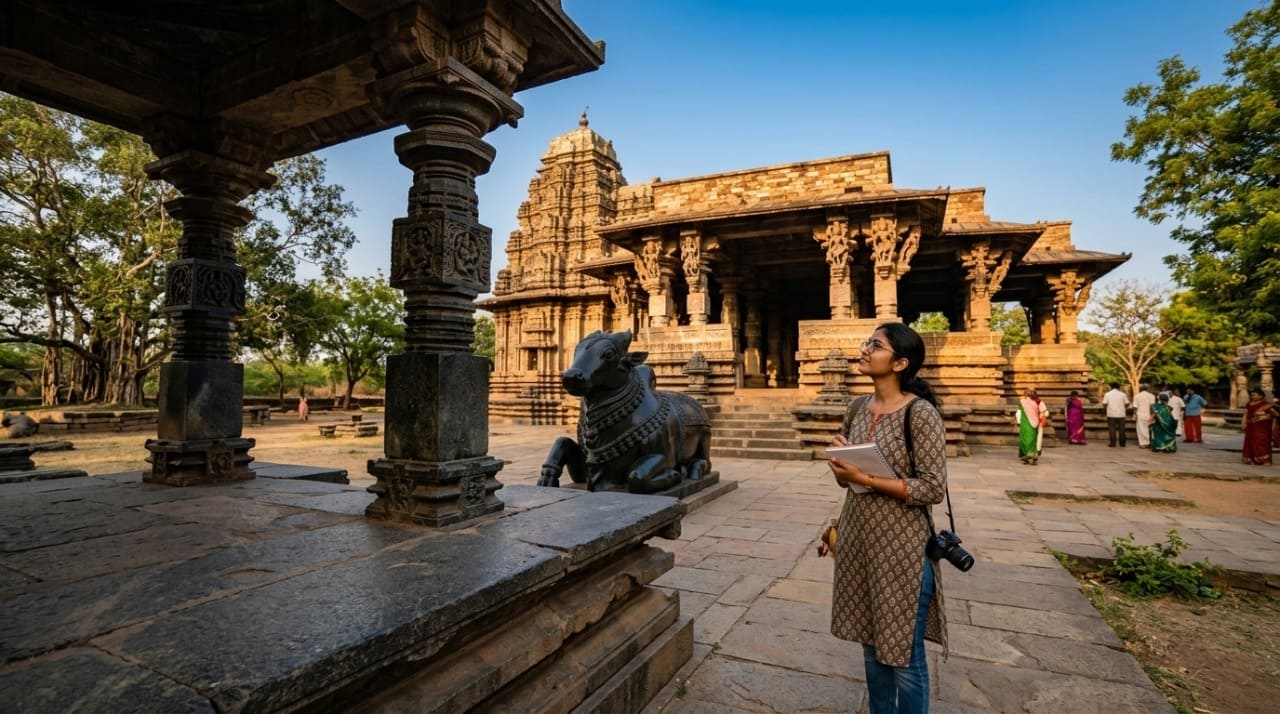
Why Kakatiya Architecture Is Important for TSPSC Aspirants
If you are preparing for TSPSC exams, the Kakatiya dynasty is not just another chapter in Telangana history. It is one of the most important cultural, political, and architectural phases of the region. The Kakatiyas shaped the identity of Telangana through their administration, irrigation works, temple architecture, fortifications, inscriptions, sculpture, and promotion of Telugu culture.
Many aspirants study Kakatiya history only through rulers and battles. They remember names like Rudradeva, Ganapati Deva, Rudrama Devi, and Prataparudra, but they often ignore architecture. That is a costly mistake. Kakatiya architecture is important for Prelims facts, Mains answers, Telangana culture questions, art and architecture, heritage tourism, and interview discussion.
The architectural legacy of the Kakatiyas is still visible in Warangal, Hanamkonda, Palampet, Ghanpur, and many other places. Their temples and forts were not just buildings. They reflected political power, religious devotion, engineering skill, artistic imagination, and regional identity. When you study them properly, you understand how Telangana’s history is carved in stone.
The Kakatiya Dynasty: A Quick Background
The Kakatiyas ruled large parts of the eastern Deccan, especially present-day Telangana and surrounding regions, between the 12th and 14th centuries. Their capital was Orugallu, the historical name of Warangal. The word Orugallu means “single stone,” and it itself reflects the region’s association with stone-based fortification and architecture.
The Kakatiya period is remembered for strong regional rule, expansion of irrigation, growth of agriculture, encouragement to trade, temple construction, and the rise of local Telugu political culture. The dynasty’s architectural style combined strength and beauty. Their buildings were practical, symbolic, and artistic at the same time.
For TSPSC, always connect Kakatiya architecture with broader themes such as regional identity, temple culture, engineering skill, sculpture, urban planning, water management, and heritage conservation.
Key Features of Kakatiya Architecture
Before studying individual monuments, understand the common features of Kakatiya architecture. This helps you answer both factual and analytical questions.
Important characteristics
- Star-shaped temple plans: Some temples used complex layouts that created visual elegance and architectural depth.
- Use of sandstone and granite: Kakatiya builders used locally available stone with great technical skill.
- Intricate sculptures: Temples were decorated with dancers, musicians, animals, floral patterns, mythological figures, and divine forms.
- Highly polished pillars: Many pillars show impressive finishing and artistic carving.
- Nandi mandapas: Shiva temples often had beautifully carved Nandi sculptures.
- Ornamental gateways: The Kakatiya Kala Thoranam is a famous example of their gateway architecture.
- Engineering innovation: The Ramappa Temple is especially known for advanced construction techniques and lightweight bricks.
- Blend of devotion and power: Temples expressed religious faith, while forts and gateways projected royal authority.
Do not memorize these features mechanically. When you write a Mains answer, use them to show how Kakatiya architecture represented both artistic excellence and political confidence.
1. Ramappa Temple: The Crown Jewel of Kakatiya Architecture
The Ramappa Temple, also known as the Rudreshwara Temple, is one of the greatest architectural achievements of the Kakatiya period. It is located at Palampet in Mulugu district of Telangana and is dedicated to Lord Shiva. The temple was built during the Kakatiya period and is associated with Recharla Rudra, a general under the Kakatiya ruler Ganapati Deva. Construction began in 1213 CE and is believed to have continued for many years. UNESCO describes the temple as the main Shiva temple in a walled complex of the Kakatiyan period.
The most remarkable thing about Ramappa Temple is that it is popularly named after its sculptor or architect, Ramappa. This itself shows the importance given to artistic skill during that period. In Indian temple tradition, temples are usually named after deities, rulers, or places. Ramappa stands out because it honors the creator’s craftsmanship.
Architectural features of Ramappa Temple
- Star-shaped platform: The temple stands on a raised platform that gives it visual grandeur.
- Floating bricks: Lightweight porous bricks were used in the superstructure, reducing the load on the building.
- Intricate sculptures: The temple has beautiful carvings of dancers, musicians, animals, and mythological scenes.
- Bracket figures: The famous sculpted female figures show grace, movement, jewelry, and artistic perfection.
- Massive Nandi: The Nandi sculpture is known for its expressive and majestic appearance.
- Earthquake-resistant ideas: The temple is often discussed for its structural stability and engineering intelligence.
Ramappa Temple was inscribed as a UNESCO World Heritage Site in 2021, making it one of the most internationally recognized heritage sites of Telangana. Telangana Tourism also highlights its UNESCO status and its importance as a major cultural site.
TSPSC exam relevance
For Prelims, remember its location, alternate name, association with Kakatiyas, dedication to Shiva, and UNESCO recognition. For Mains, use Ramappa Temple as an example of Kakatiya engineering, temple architecture, heritage tourism, and Telangana cultural identity.
2. Thousand Pillar Temple: The Pride of Hanamkonda
The Thousand Pillar Temple, also called the Rudreswara Swamy Temple, is located in Hanamkonda. It is one of the most famous Kakatiya-era temples and is associated with the reign of Rudradeva. Telangana Tourism identifies the Thousand Pillar Temple as one of the major attractions of the Kakatiya period in the Warangal-Hanamkonda region.
Do not take the name “Thousand Pillar Temple” literally in a narrow way. The name represents the richness of its pillared architecture and the visual impression created by multiple carved pillars. The temple is famous for its polished pillars, sculptural beauty, and architectural symmetry.
Important features
- Trikutalayam style: The temple is associated with three shrines, traditionally linked with Shiva, Vishnu, and Surya.
- Carved pillars: The pillars show high-quality craftsmanship and decorative patterns.
- Nandi sculpture: The temple has a beautifully carved monolithic Nandi.
- Star-shaped plan: The layout reflects the geometric sophistication of Kakatiya design.
- Soapstone-like finish: Many carvings show smooth finishing and artistic polish.
The Thousand Pillar Temple is useful in TSPSC answers because it shows the religious and cultural inclusiveness of the period. A temple associated with Shiva, Vishnu, and Surya suggests a broader sacred imagination rather than a narrow sectarian approach.
How to remember for exams
Link it with Hanamkonda, Rudradeva, Kakatiya sculpture, pillared mandapa, Nandi, and trikutalayam style. If you are writing a Mains answer on Kakatiya art, mention it along with Ramappa Temple and Warangal Fort.
3. Warangal Fort: Power, Planning, and Protection
Warangal Fort is one of the strongest symbols of Kakatiya political power. Located in Warangal, it reflects the military, urban, and architectural imagination of the dynasty. Warangal was the Kakatiya capital, and the fort represented both administrative authority and defensive strength.
The fort is famous for its massive stone structures, gateways, ruins, and the iconic Kakatiya Kala Thoranams. Incredible India describes Warangal Fort as a magnificent fortress built by the Kakatiya dynasty.
Important features of Warangal Fort
- Multiple fortification layers: The fort had defensive arrangements that reflected strategic planning.
- Stone gateways: The ornamental gateways are among the most recognizable symbols of Telangana heritage.
- Temple ruins: The fort complex contains remains that indicate the religious and cultural importance of the site.
- Urban significance: Warangal was not merely a fort; it was a capital city with political and cultural importance.
- Symbolic value: The fort represents the power and confidence of the Kakatiya state.
For TSPSC Mains, Warangal Fort can be used to discuss medieval Telangana urbanism, defence architecture, political centralization, and heritage conservation.
4. Kakatiya Kala Thoranam: The Iconic Gateway of Telangana
The Kakatiya Kala Thoranam, also known as the Warangal Gate, is one of the most iconic symbols of Telangana. These ornamental stone gateways are associated with Warangal Fort and the Kakatiya architectural tradition. Their design is so important that the gateway has become a widely recognized cultural symbol of Telangana identity.
The Kala Thoranam is not just a gate. It is a statement of artistic confidence. Its balanced proportions, carved stonework, and monumental presence reflect the Kakatiya ability to combine beauty with authority.
Why it matters
- It represents the artistic identity of the Kakatiya period.
- It is associated with Warangal Fort and the old Kakatiya capital.
- It reflects ornamental gateway architecture.
- It became a modern cultural symbol of Telangana.
- It is useful for questions on state symbols, heritage, and regional identity.
In an exam answer, you can write that the Kakatiya Kala Thoranam shows how medieval architecture can become part of modern regional identity. This is a strong analytical point for Mains.
5. Ghanpur Group of Temples: A Lesser-Known Heritage Treasure
The Ghanpur Group of Temples, also known as Kota Gullu, is another important Kakatiya architectural site. Many aspirants remember only Ramappa and Thousand Pillar Temple, but Ghanpur is also valuable for TSPSC because it shows that Kakatiya temple construction was not limited to one or two famous monuments.
The Ghanpur temples contain stone mandapas, carved pillars, shrine structures, and sculptural remains that reflect the artistic tradition of the period. Telangana Tourism lists Ghanpur Group of Temples among important Kakatiya-period attractions in the region.
Exam importance
- It helps you write a richer answer beyond the most common examples.
- It shows the spread of Kakatiya temple-building activity.
- It can be used in heritage conservation and tourism answers.
- It reflects regional temple networks around Warangal and nearby areas.
If you mention Ghanpur in a Mains answer, your answer looks more well-prepared because most aspirants stop with only Ramappa and Thousand Pillar Temple.
6. Temple Tanks and Water Architecture
Kakatiya architecture should not be understood only through temples and forts. The Kakatiyas were also known for their emphasis on irrigation and tanks. Water structures were central to agriculture, settlement growth, and temple life.
In the Telangana region, tanks were not just water bodies. They supported cultivation, cattle, village life, and local economy. Around temples, tanks also had ritual and social significance. This connection between architecture and water management is very important for TSPSC.
How to use this in Mains
You can write that the Kakatiyas contributed not only to religious architecture but also to water-based rural development. Their tanks and irrigation works helped strengthen agriculture and settlement patterns in semi-arid Telangana. This is a powerful interdisciplinary point connecting history, geography, economy, and governance.
7. Sculptures: The Living Stone Art of the Kakatiyas
Kakatiya sculpture is known for grace, detail, and movement. The figures on temple walls and pillars do not look lifeless. Dancers, musicians, warriors, animals, and divine forms show energy and rhythm. This reflects the cultural life of the time.
The famous bracket figures of Ramappa Temple are especially admired for their elegance. Their ornaments, body posture, facial expression, and movement show the sculptor’s deep understanding of human form and artistic balance.
Important sculptural themes
- Dancers and musicians.
- Mythological figures.
- Floral designs and geometric patterns.
- Animals such as elephants, horses, and lions.
- Divine forms connected with Shaiva tradition.
- Scenes reflecting courtly and cultural life.
For TSPSC, remember that sculpture is not only decoration. It is historical evidence. It tells us about dress, ornaments, dance, music, religious beliefs, social life, and artistic standards of the Kakatiya period.
8. Kakatiya Architecture and Women’s Cultural Presence
The Kakatiya period is strongly associated with Rudrama Devi, one of the most remarkable women rulers in Indian history. While not every monument can be directly linked to her patronage, the dynasty’s cultural environment is important when discussing women in Telangana history.
Temple sculptures often include graceful female figures, dancers, and attendants. These figures reflect artistic ideals and cultural expressions of the time. For Mains, you can carefully connect Kakatiya heritage with broader themes such as women’s presence in history, royal authority, cultural patronage, and regional pride.
9. Heritage Tourism and the Kakatiya Legacy
Today, Kakatiya monuments are not only historical sites. They are also important for heritage tourism, local economy, Telangana identity, and cultural education. Places like Warangal, Hanamkonda, Palampet, and Ghanpur can form important heritage circuits.
Tourism around Kakatiya monuments can support local guides, transport, handicrafts, food businesses, hotels, and rural livelihoods. But tourism must be responsible. Conservation should not be sacrificed for commercialization.
Balanced Mains points
- Kakatiya monuments can strengthen Telangana’s heritage tourism.
- UNESCO recognition of Ramappa can attract national and international attention.
- Local communities should benefit from tourism development.
- Infrastructure, guides, signage, cleanliness, and interpretation centres are important.
- Conservation must be scientific and sensitive to heritage value.
This topic is useful not only for history but also for questions on economy, culture, tourism, and sustainable development.
10. How to Prepare Kakatiya Architecture for TSPSC
Do not study architecture as a list of monuments. Study it in layers. First understand the Kakatiya dynasty. Then study important monuments. Then note architectural features. Finally, connect them with Telangana identity and current heritage conservation.
Prelims checklist
- Ramappa Temple: Location, alternate name, deity, UNESCO status, Kakatiya association.
- Thousand Pillar Temple: Hanamkonda, Rudreswara Swamy Temple, pillared architecture, Nandi.
- Warangal Fort: Kakatiya capital, fort architecture, gateways.
- Kakatiya Kala Thoranam: Iconic ornamental gateway and cultural symbol.
- Ghanpur Group of Temples: Kakatiya temple complex.
- Important rulers: Rudradeva, Ganapati Deva, Rudrama Devi, Prataparudra.
- Common features: Sculpture, star-shaped plans, mandapas, Nandi, gateways, stone carving.
Mains answer structure
- Introduction: Mention Kakatiyas as a major medieval Telangana dynasty known for temple and fort architecture.
- Main body: Explain Ramappa, Thousand Pillar Temple, Warangal Fort, Kala Thoranam, and Ghanpur temples.
- Features: Add sculpture, pillars, gateways, engineering, and water structures.
- Significance: Discuss cultural identity, engineering skill, tourism, and heritage conservation.
- Conclusion: End with Kakatiya architecture as a living symbol of Telangana’s historical pride.
Final Mentor Advice
Kakatiya architecture is a scoring topic because it is visual, factual, and analytical at the same time. You can remember monuments easily, use them in Mains answers, and connect them with Telangana identity. The trick is to avoid studying them like dead stones. See them as living evidence of a powerful regional civilization.
Ramappa Temple shows engineering and sculptural brilliance. Thousand Pillar Temple shows artistic refinement. Warangal Fort shows political strength. Kakatiya Kala Thoranam shows symbolic identity. Ghanpur temples show the wider spread of Kakatiya temple culture.
At CrackSarkar, we always tell aspirants that Telangana history becomes easy when you connect facts with places. Whenever you read about a monument, imagine its location, ruler, purpose, features, and exam value. That is how you remember better and write stronger answers.
The Kakatiyas did not leave behind only ruins. They left behind a heritage that continues to inspire Telangana even today. Study it with respect, revise it with clarity, and use it confidently in TSPSC Prelims, Mains, and interviews.