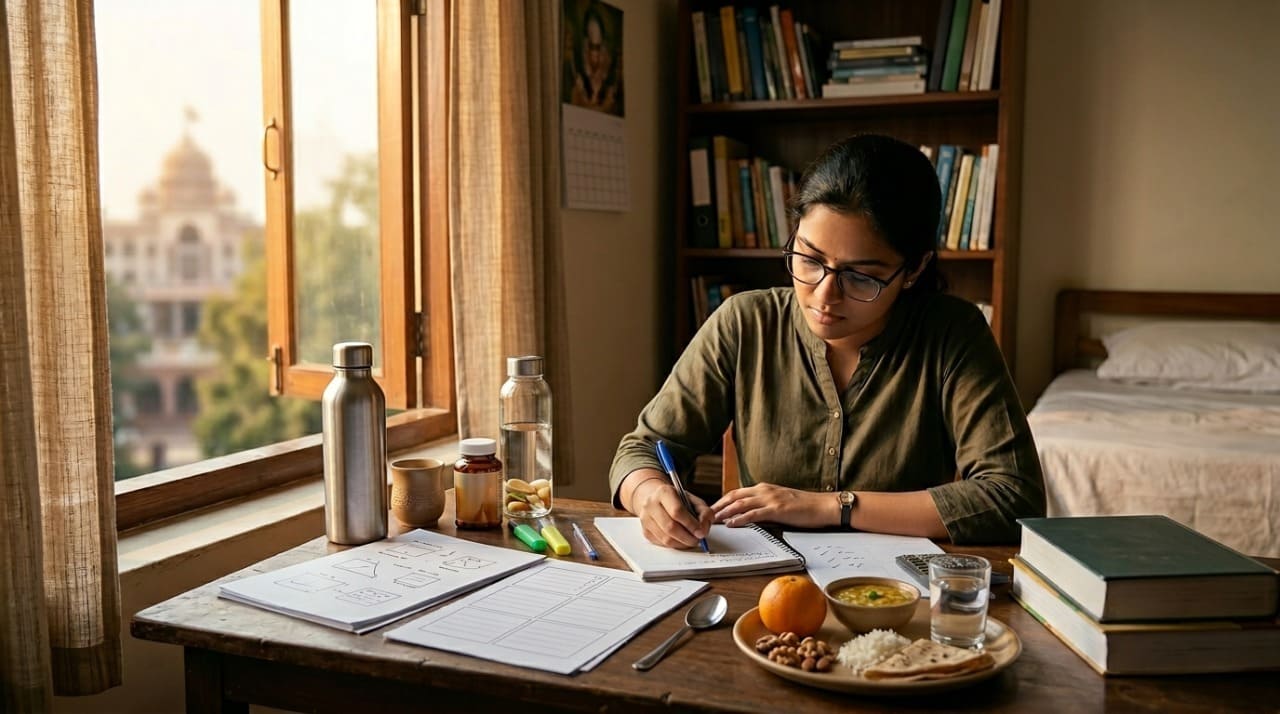
Why Sleep and Diet Matter More Than Aspirants Realise
When competitive exam aspirants talk about preparation, they usually discuss books, test series, coaching, current affairs, revision plans, and previous papers. Very few talk seriously about sleep and diet. But ask any consistent topper, and they will tell you one honest truth: your brain is your main weapon in this journey, and you cannot keep using it carelessly every day and expect peak performance in the exam hall.
For TSPSC aspirants, especially those preparing for Group 1, Group 2, Group 3, DSC, Police, Junior Lecturer, or other Telangana government exams, the preparation journey is long. You need memory for facts, clarity for concepts, patience for revision, speed for MCQs, and emotional balance for mock tests. All of these depend not only on how many hours you sit with books but also on how well your body and brain are functioning.
Many aspirants proudly say, “I slept only four hours and studied the whole night.” It may sound like dedication, but if repeated regularly, it becomes a dangerous preparation habit. Poor sleep reduces concentration, increases irritability, weakens memory recall, and makes revision inefficient. Similarly, eating irregularly, skipping meals, depending only on tea, biscuits, fast food, or sugary snacks may give temporary energy but leads to fatigue and poor focus later.
Let us be very clear: sleep and diet are not luxuries for aspirants; they are performance tools. A well-rested and well-fed aspirant can study in six focused hours what a tired aspirant struggles to complete in ten distracted hours.
The Biggest Myth: More Study Hours Always Mean Better Preparation
One of the most damaging myths in competitive exam preparation is that more hours automatically mean more marks. Study hours matter, but only when they are productive. If you are reading polity at midnight with burning eyes, rereading the same paragraph five times, and forgetting it the next morning, those hours are not helping you.
Competitive exams reward recall under pressure. That means your brain must store, organise, and retrieve information efficiently. Sleep plays a major role in this process. When you sleep properly, the brain gets time to process what you studied, strengthen memory, and prepare for the next day’s learning. When you cut sleep repeatedly, your study sessions may look long, but your retention becomes weak.
Diet also affects study quality. Heavy, oily meals can make you sleepy. Long gaps without food can make you restless. Too much caffeine can disturb sleep. Too much sugar can cause energy crashes. So the real question is not, “How many hours did I study?” The better question is, “How many high-quality hours did I study?”
How Poor Sleep Damages Exam Preparation
Poor sleep does not always show immediate damage. You may manage for two or three days. But slowly, it affects your preparation in ways you may not notice at first.
Common Effects of Poor Sleep on Aspirants
- Weak memory recall: You read topics but forget them quickly.
- Low concentration: You sit for long hours but your mind keeps wandering.
- Slow reading speed: Simple topics take more time than usual.
- Poor mock test performance: You make silly mistakes even in known areas.
- Emotional instability: Small setbacks feel bigger than they are.
- Low motivation: You feel tired even before starting the day.
- Bad decision-making: In MCQs, you overthink and change correct answers.
Now connect this with TSPSC preparation. Subjects like Telangana history, Indian polity, economy, geography, current affairs, and science require repeated revision. If sleep is weak, revision becomes harder. You may start feeling that the syllabus is impossible, when actually your brain is simply exhausted.
How Much Sleep Should an Aspirant Aim For?
Most aspirants perform better when they get a regular, sufficient sleep routine. For many adults, around 7 to 8 hours of sleep works well, though individual needs may vary. The key is consistency. Sleeping five hours on weekdays and ten hours on Sunday does not fully solve the problem. Your brain likes rhythm.
If your current sleep schedule is disturbed, do not try to fix everything in one day. Gradually move your sleep and wake-up time. For example, if you sleep at 1:30 AM, try shifting to 1:00 AM, then 12:30 AM, then 12:00 AM. Small changes are easier to sustain.
A Practical Sleep Routine for Aspirants
- Fix a regular sleep time and wake-up time as much as possible.
- Avoid heavy screen use in the last 30 to 45 minutes before sleep.
- Do not take mock test analysis or stressful current affairs debates right before bed.
- Keep the last study session light: revision, flashcards, or error notebook.
- Avoid excessive tea or coffee late in the evening.
- Keep your sleeping area clean, simple, and distraction-free.
You do not need a perfect lifestyle. You need a repeatable routine. Even a modest improvement in sleep can improve your study quality noticeably.
Night Study vs Morning Study: Which Is Better?
Many aspirants ask, “Should I study at night or early morning?” The answer depends on your natural rhythm and responsibilities. Some aspirants are genuinely more alert at night. Some perform better in the morning. The problem is not night study itself. The problem is irregular sleep and poor recovery.
If you study at night but still sleep enough and wake up refreshed, it may work for you. But if night study means sleeping at 3 AM, waking up tired, skipping breakfast, and feeling dull all day, it is harming your preparation.
Morning study has one advantage: the mind is usually fresh, distractions are fewer, and it creates a confident start to the day. For subjects that require deep understanding, such as polity, economy, or Telangana movement analysis, morning study can be useful. Night sessions can be used for revision, MCQs, or current affairs consolidation.
Best Use of Study Timings
- Morning: New concepts, difficult subjects, answer writing, deep reading.
- Afternoon: Revision, short notes, map practice, current affairs.
- Evening: MCQs, sectional tests, group discussion if useful.
- Night: Light revision, error notebook, next-day planning.
The best schedule is the one you can follow consistently without damaging your health.
Diet: The Fuel Behind Focus and Stamina
Food is not just about hunger. For aspirants, food is fuel for concentration, memory, and stamina. If your diet is irregular, your energy will also be irregular. You may feel energetic for one hour and sleepy for the next three hours. That is not ideal for a long preparation journey.
A good aspirant diet does not mean expensive foods, imported items, or complicated meal plans. It means simple, balanced, home-style food eaten at regular times. For most Indian students, a practical diet can be built with common foods like rice, roti, dal, vegetables, curd, eggs, fruits, peanuts, sprouts, milk, buttermilk, and seasonal local items.
The aim is to avoid two extremes: eating too little and eating too heavily. Both affect preparation. Skipping meals may make you feel light temporarily, but it often reduces focus. Eating very heavy meals, especially during the afternoon, may make you sleepy and slow.
What Should Competitive Exam Aspirants Eat?
There is no single perfect diet for every aspirant. Food habits depend on family, budget, region, health conditions, and personal preference. But you can follow some broad principles that work for most students.
Build Your Plate Like This
- Carbohydrates for energy: Rice, roti, millets, upma, poha, idli, dosa, or other regular foods.
- Protein for stability: Dal, eggs, curd, paneer, sprouts, chana, peanuts, fish, chicken, or other suitable options.
- Vegetables for micronutrients: Include cooked vegetables or salads based on your comfort.
- Healthy fats in moderation: Nuts, seeds, groundnut, sesame, or home-cooked oils in reasonable quantity.
- Hydration: Water, buttermilk, lemon water, or coconut water when available.
For Telangana aspirants living in hostels or coaching hubs, food may not always be perfect. But even then, you can improve small things: carry peanuts or fruit, avoid skipping breakfast, reduce oily snacks, drink enough water, and avoid eating too late at night.
Breakfast: Do Not Start the Day Empty
Many aspirants skip breakfast because they wake up late or rush to coaching. This is a common mistake. If your first proper meal is directly lunch, your morning study session may suffer. A simple breakfast can improve concentration and reduce unnecessary snacking.
Simple Breakfast Options
- Idli with chutney or sambar.
- Upma with peanuts or vegetables.
- Dosa with chutney.
- Poha with groundnuts.
- Chapati with curd or dal.
- Boiled eggs with fruit, if suitable for your diet.
- Sprouts or chana with buttermilk.
You do not need a fancy breakfast. You need something that keeps you alert and comfortable.
Lunch and the Afternoon Sleep Trap
Afternoon sleepiness is a major problem for aspirants. Sometimes it happens because of poor sleep at night. Sometimes it happens because lunch is too heavy. If you eat a large oily meal and immediately sit with a difficult subject, your body may resist.
Keep lunch balanced. Eat enough, but do not overload. After lunch, take a short walk for 5 to 10 minutes. Then use the early afternoon for lighter tasks like revision, current affairs notes, or MCQs instead of starting the hardest subject immediately.
Smart Afternoon Strategy
- Do not eat until you feel extremely heavy.
- Avoid lying down immediately after lunch.
- Use post-lunch time for revision or easier subjects.
- If needed, take a short power nap, but do not let it become two hours of sleep.
This small adjustment can save many study hours over months.
Tea, Coffee, and Caffeine: Use Carefully
Tea and coffee are part of many aspirants’ daily routine. There is nothing wrong with moderate use if it suits your body. The problem begins when caffeine becomes a replacement for sleep. If you are drinking tea or coffee again and again just to stay awake, your routine needs correction.
Too much caffeine, especially in the evening or night, can disturb sleep. Poor sleep then creates tiredness the next day, and you again depend on caffeine. This cycle slowly affects your preparation.
Better Caffeine Habits
- Use tea or coffee as a support, not as a survival tool.
- Avoid taking caffeine late at night if it affects your sleep.
- Do not combine caffeine with long screen scrolling breaks.
- Drink water regularly, not only tea or coffee.
The goal is alertness, not artificial overstimulation.
Hydration: The Most Ignored Study Habit
Dehydration can make you feel dull, tired, and headache-prone. Many aspirants sit for long hours and forget to drink water. Keep a bottle near your study table. This simple habit prevents unnecessary fatigue.
You do not need to force excessive water, but you should avoid long hours without drinking anything. If you study in hot weather, travel to coaching, or live in a hostel, hydration becomes even more important.
Exam Season Diet: What to Do in the Last Month
The last month before the exam is not the time for food experiments. Do not suddenly start extreme dieting, heavy supplements, or unfamiliar foods. Your body should feel stable during revision and mocks.
Last Month Food Rules
- Eat familiar, safe, home-style food as much as possible.
- Avoid overeating late at night.
- Do not skip meals during full-length mock days.
- Carry water and a light snack if you travel for coaching or tests.
- Reduce junk food, especially if it causes acidity, sleepiness, or stomach discomfort.
- Keep dinner light before important mock tests and the actual exam.
On the day before the exam, your aim is simple: sleep well, eat normally, and keep your stomach comfortable. Do not try any new “brain food” suggested by random people.
Stress Eating and Loss of Appetite: Handle Both Carefully
Some aspirants overeat when stressed. Others lose appetite completely. Both are common during preparation. If stress eating becomes frequent, identify the trigger. Are you eating because you are hungry, or because a mock score disappointed you? If you are eating from stress, take a short walk, talk to a friend, or write down what went wrong in the test instead of immediately reaching for snacks.
If you lose appetite before mocks or exams, choose light and familiar foods. Do not force a heavy meal. But do not go completely empty either. A banana, curd rice, idli, upma, or a small regular meal may help depending on your comfort.
If sleep, appetite, anxiety, or health issues become severe or continue for long, speak to a qualified medical professional. Preparation should never come at the cost of serious health damage.
A Practical Daily Routine for Energy Management
Here is a realistic routine that many TSPSC aspirants can adapt. Adjust it based on your college, job, coaching, or family responsibilities.
Sample Routine for Full-Time Aspirants
- 6:00 AM: Wake up and drink water.
- 6:30 AM – 8:30 AM: Deep study session for difficult subject.
- 8:30 AM: Breakfast.
- 9:30 AM – 12:00 PM: Core subject study or coaching revision.
- 12:30 PM: Lunch.
- 1:30 PM – 3:00 PM: Light revision or current affairs notes.
- 4:00 PM – 6:00 PM: MCQs, sectional tests, or answer writing.
- 7:30 PM: Dinner.
- 8:30 PM – 10:00 PM: Error notebook and short revision.
- 10:30 PM – 11:00 PM: Wind down and sleep preparation.
Sample Routine for Working Aspirants
- Morning: 60 to 90 minutes of revision or current affairs.
- Work break: Quick flashcard or short-note review if possible.
- Evening: 2 hours of core subject study.
- Night: 45 minutes of MCQs or error notebook.
- Weekend: Mock test, deep revision, and weekly planning.
Notice that food and sleep are built into the routine. They are not treated as interruptions. That is how serious aspirants protect consistency.
How Sleep and Diet Improve Mock Test Performance
Mock tests are not only about knowledge. They also test stamina. A full-length paper requires attention from the first question to the last question. If you are sleepy, hungry, dehydrated, or mentally tired, your accuracy drops. You may misread words like “not correct,” “only,” “incorrect,” or “best explanation.” These small mistakes can cost marks.
Before a mock test, follow the same routine you want to follow before the actual exam. Sleep properly, eat a light meal, keep water nearby if allowed, and avoid studying until the last minute in panic. Train your body and mind together. The exam hall should not be the first time you test your energy management.
Common Lifestyle Mistakes Aspirants Should Avoid
- Sleeping very late every day: This weakens consistency and morning productivity.
- Skipping breakfast: It can reduce focus in the first half of the day.
- Depending only on tea or coffee: Caffeine cannot replace sleep and nutrition.
- Eating heavy meals before study sessions: This can make you sleepy and slow.
- Ignoring water: Dehydration can silently reduce energy.
- Using mobile in bed: This delays sleep and increases mental noise.
- Changing diet suddenly before exams: New foods can disturb your body at the wrong time.
- Thinking health is secondary: Poor health directly affects preparation quality.
Final Mentor Advice: Treat Your Body Like Part of Your Preparation
Competitive exam preparation is not only a test of knowledge. It is a test of consistency, patience, memory, focus, and emotional balance. Sleep and diet support all of these. You cannot separate your mind from your body and expect long-term performance.
If you are serious about TSPSC or any competitive exam, start making small changes today. Sleep at a regular time. Eat breakfast. Drink water. Reduce late-night scrolling. Keep dinner light. Use caffeine carefully. Take short walks. Revise before sleep instead of stressing before sleep.
You do not need to become a fitness expert. You simply need to become a responsible aspirant who understands that a healthy routine creates a sharper mind. Your books, notes, and mock tests are important. But the person using them is even more important.
In the final exam, your rank will not depend only on what you studied. It will also depend on how clearly you recall it, how calmly you think, and how steadily you sit through the paper. Good sleep and simple, balanced food help you do exactly that.
Study hard, but recover well. Eat simply, sleep properly, and prepare like someone who wants to sustain the journey until selection.